Fiberglass Grating | Pricing Details

Fiberglass Grating | Pricing Details

Fiberglass grating is increasing in popularity in recent years, as with many fiberglass products, due to the versatility and renewability of fiberglass as a resource. Being somewhat eco-friendly, and very durable, fiberglass is a material that makes all sides of the argument more or less happy.

The question everyone asks, though, relates to affordability and pricing. How costly is fiberglass grating, how are prices determined, and what factors are key contributors to the resulting prices?

The truth is, there’s a lot to factor in with pricing of fiberglass grating, and no one thing supersedes the rest in level of impact. As a result, all of the contributing factors are equally key.

The truth is, there is no standard industry price for fiberglass grating, when the price is given to the consumer, but the best way to determine if a price seems reasonable is to consider the factors alluded to above. So, let’s take a look at what a few of these might be.
Material costs are relatively constant, but they are a factor. The components used in fiberglass are silica granules, epoxy and acetone which together form a liquid to solid transition into a durable shell. The price of these materials changes little from location to location or time to time, aside from general inflation and local economy.

The manufacturing process involved is a major contributor, however. Some fiberglass grating manufacturing processes involve a lot of human intervention to cut or mold the material into the desired shape. These tend to be costlier processes, and so if the producer in question mentions these processes as their techniques of choice, then their slightly higher prices are justified.

Manually-crafted fiberglass is often of higher quality than machined, so if this is raising the price to some extent, it is worth the compromise.

Storage of this material is a factor too, but in a different way. Companies that specialize in fiberglass grating, or grating in general, will have reduced storage and warehousing costs than a company with more diversified interests. With this in mind, it’s best to seek out a company that manufactures and sells grating directly and exclusively, to cut out the higher cost of diversified warehousing.

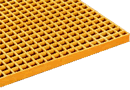
More directly applied to the consumer, the amount of grating and the size of the cells is a factor as well. Smaller cells are more affordable, as they are easier to produce and are often less frequently damaged in handling. Larger, less rigid grating is more susceptible to damage in shipping and storage. The fact is, any product has this sort of overhead, of some damaged goods occurring internally. This overhead affects price, and so, going with serially-implemented smaller cells is going to be a more affordable option.

Fiberglass grating is usually sold in quantities, rather than individual units, It is often palettes or reams of cells at a time, ergo it is more affordable and cost effective to use it in scaled jobs. However, with smaller units, individual cell replacements or small scale quantities can be available reasonably-priced from grating specialists. This is more of a challenge for diversified providers that do not handle grating as a primary or exclusive product.

Again, there is no industry standard for pricing, but you know you are getting the best price when the company is all about grating, and when they list their processes.
Fiberglass Grating | Benefits and Uses

Fiberglass Grating | Benefits and Uses

With all of the misunderstanding and confusion over the capacity and nature of fiberglass, and the true uses of grating materials, perhaps it’s time to clarify a little bit about both. In doing so, perhaps we can learn the benefits of fiberglass and the true flexibility of grating as a construction material.


So, as we all may or may not know, fiberglass is an epoxy-composite of silica glass which can be molded and shaped into any form imaginable with very simple and cost effective industrial practices. The cost effective nature of fiberglass grating, from any respectable company in the industry, is usually passed on to consumer, who will enjoy not only affordability with this diverse material, but other benefits as well.


Fiberglass is incredibly durable, able to withstand extreme temperature fluctuations, stress and exposure to corrosive materials which metals and plastics cannot, depending on which curing process was used on it. As a result, fiberglass can be a base material for creating any number of construction components.


It just so happens, it’s perfect for grating. So, you find yourself saying “Well, fiberglass is impressive alright. But what’s so special about grating?”

Where do we start?


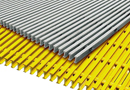
Like the cost-effectiveness of fiberglass, grating is a very efficient way to design surfaces and structure components. Being a compact, self-reinforced latticework, grating can provide the strength of a solid object while using a fraction of the material. Add to this the fact that unlike solid surfaces, grating shows early warnings of stress points forming, so that it can be replaced before accidents happen, and you have a winning concept. But that isn’t all, grating, by its very design, is a high-traction, non-slip surface which adds to safety in the workplace or in a home. The perforated design of grating means that spillage drains automatically too, adding to this non-slip aspect as well.


Grating is also further cost-effective due to its cellular, easy-to-replace nature, meaning that flooring and other structures made of grating do not need to be entirely replaced when one sheet or cell is damaged or begins to form stress.
Combining the durability and affordability of fiberglass with the practicality and safety of grating means that this construct can be used in more ways than you can probably imagine.


Most people picture fiberglass being relegated to pool shells or car bodies, where heavy weight would result in some give or even collapse, but fiberglass used in grating, alongside the natural reinforcement that grating structure provides, makes it incredibly rigid and supportive, which means that components such as stairs can easily be built from it. With the heavy traction and endurance of fiberglass grating, this makes for some incredibly safe stairs, safer than cement or wood or metal any day.


Docking is another magnificent example of the safety and practicality of fiberglass grating. Due to the wet conditions of a docking area, regardless of weather, the traction and natural draining capabilities of fiberglass grating make it very safe, and very capable of enduring corrosive salt and rough water conditions with ease.


Fiberglass grating is hands down the best material for commercial drainage as well, in environments such as car washes, kitchens and industrial climates, where its lasting power and affordability for large implementation make it not only the safe option, but the wise one. Fiberglass is capable of enduring exposure to a wider array of chemicals than metal or plastic, and can withstand higher temperatures than plastic. It does not corrode like metal, and does not absorb heat like metal, making fiberglass grating which was recently exposed to heated liquids much safer and less of a risk to induce burns.

Fiberglass grating is also flame retardant, making it great for building decks or elevated patios, where barbeques and other activities may be held. Unlike wood, it doesn’t require regular application of water seals, and unlike cement, it does not form expensive-to-repair cracks or ugly stains that require power washing to remove.


Fiberglass grating is also quickly replacing its plastic cousin for shipping containers for this same cost practicality and endurance capacity. Fiberglass is nearly as light weight as plastic, with none of plastic’s trade off of low heat and stress resistance.

Fiberglass | What is it and How is it made?

Fiberglass | What is it and How is it made?

Fiberglass is one of the most widely used synthetic materials in modern times, it finds its way into all manner of things from automobiles to construction and even surgical uses as well. It’s been around for quite some time, but many people are unsure of exactly what it is, and how it’s made.

It sure doesn’t look like glass, does it? And, well, “fiber” could mean any number of things these days. With more people recommending fiberglass grating for drainage and industrial purposes in recent years, maybe it’s time we take a look at what fiberglass is, how it’s made and used, and what’s involved in taking care of it. Maybe with a little more understanding of the technology, we can fully appreciate it for the miracle it is.

At its core, fiberglass is an epoxy resin composed of bonding material and micro-fibers of silicate glass. In its raw form, upon initial mixture, it has a viscous form similar to other epoxy compounds. It is often mixed with acetone or ether as well to increase the speed at which it coalesces and hardens in industrial practices. Once dried, depending on the process involved, it has a slightly plastic-like rigidity and a unique texture resembling a hardened putty or recycled plastic compound.

So, how exactly is this odd substance shaped into so many interesting things, and how do they get it to be smooth and shiny in some cases? Well, it’s surprisingly simple, but there are a few different processes used.

Remember, fiberglass is a viscous liquid in its initial state, and as such, it’s molded into various forms. One of the older methods for shaping fiberglass is to use vacuum or pressure molds not unlike the die casting process for some metals. The fiberglass, in its liquefied state, is pressed or injected into a mold. After this it is either chemically hardened with catalysts and acetone, or it is baked very briefly in a furnace between 330-420 degrees Fahrenheit.

This process creates a more rigid form of fiberglass that can be smooth to the touch and rather resistant to weather conditions that other processes cannot. However, with this process, it can be slightly brittle, meaning that it cannot exceed the posted stress levels by much. Fiberglass grating can be made this way, and this process is ideal for grating that will be used in drainage systems, but not really for industrial systems.

A similar process involves pressing it into sheets that are chemically hardened. These are then mounted onto rigging called a “jig”, where either robotic arrays or skilled workers cut it into various shapes. This process creates slightly less rigid, slightly less smooth fiberglass, which can be used to make grating that withstands a bit more stress. It’s somewhat costlier to manufacture due to the length of time to harden, and the effort that goes into cutting and shaping this form of fiberglass, but for industrial and construction purposes, it tends to be the most precise and durable, especially for grating and sheet work.

A third process is used, often for the creation of pool shells and some parts of vehicle bodies – seldom for grating. This involves manual or robotic spraying of epoxy fiberglass onto a shaping mold in a series of coats not unlike paint or plastic epoxy. This produces the well-known “bubbly” form of fiberglass which isn’t very rigid but very durable against water and stress. It’s less aesthetically appealing, and is therefore seldom used for things that will be directly visible in a structure. It is usually heat-hardened, but can be chemically hardened as well.

An extra stage in this process may be employed where a single side of the finished component is polished or sanded by either machines or skilled workers, to remove the uneven “bubble” appearance of one side of the shell. Automobile plants employ this heavily in modern times. Combining this with press mold techniques can also produce a rigid, transparent glass similar to Plexiglas, though this process is not yet heavily used as the product is costly and not quite as strong or scratch resistant as Plexiglas.

When it comes to maintaining fiberglass, be it grating or otherwise, it’s important to know how your fiberglass was cured. Different curing and hardening processes make it more or less resistant to thermal variation and sun exposure. Some forms of fiberglass become brittle and decay with over-exposure to UV, so it is important to be sure that the material is rated for high UV exposure in overly sunny places where this may be an issue. Fiberglass intended for draining is intended to be exposed for long periods of time to moisture, so it is important to make sure this material isn’t used in locations where long periods of absolute zero moisture may occur.

Fiberglass may develop cracks or weak spots, but these can sometimes be repaired with standard epoxy putty. Do not, however, attempt to use epoxy putty to repair grating, as any segment being weakened compromises the entire structure and it should then be replaced.